
"For what one has to learn to do, we learn by doing"(Solomon and Higgins 1996:18)
Aristotle

This inspirational statement from my favourite philosopher, Aristotle, cited in my current book "History of Philosophy", best describes my experience in the Interdisciplinary Communication Project course at RMIT University. Although I have prepared a lot by searching reviews, finding teammates, and even reading through samples very soon, I’m still shocked by the "Just Do It" spirit of the course. However, the practical knowledge it brings about is gold. The most precious lessons I learnt through our team’s project execution in general and problems in particular are working with my personality professionally and conflict resolution approach.

The work of Michael Margolis about “Storytelling for Disruption” has reminded me of the importance of storytelling for innovators, especially innovative communicators in this highly competitive environment where the employment conditions and structures are described as “atypical” (Eigler and Azarpour 2020). Therefore, we are always taught about the crucial role of reputation management, which strategically showcases both your personal and professional life as an "informal" commitment of your passion and ability in the industry (Eigler and Azarpour 2020).
.
.
.
Taking that into account, I take this course as an opportunity to start my reputation management strategy. I aim to first identify who I am, then practice working with my personality through insights of my own. Our lecturer has introduced us to the DISC model, which helps us identify our personal styles to not only better manage our work, but also better understand others for a more effective teamwork.
The result from the test showed that I’m the DISC C style personality which can be briefly described as “Analyst”. According to Dr. Marston's DISC theory, precision, detail, and diligence are key characteristics of people with type C personality styles, which makes them considered as the team's "anchor of reality" (Marston 1943). Therefore, they can contribute the most when it comes to creative problem solving thanks to their perspective on details that other personality types do not have.
After knowing my DISC personality, to be honest, I was quite surprised and tried repeating the test two more times but the result was still the same. It confused me because, from the beginning of the course, I was confident in a creative position for myself, which is my best forte so far, but it deviated from my type C personality. However, after reviewing my previous ideation processes, I realised that I relied a lot on data, information, and strategy as a researcher or planner rather than a creative person. Therefore, I gave myself a try at the Strategic Planner position, and, fortunately, it turned out well.
I have taken advantage of my realistic, accurate and creative thinking in problem solving for two main tasks: planning and evaluation in the project. Specifically, I was entrusted with the communication decisions (objectives, strategies, and tactics) and the overall campaign framework with consensus and understanding of the work and vision of the research and the creative team (Parenteand Strausbaugh-Hutchinson2014). I carried out the planning process in parallel with the effectiveness evaluation method with the four phases of a media campaign including concept testing, copy testing, concurrent testing and post testing (Parenteand Strausbaugh-Hutchinson2014). As a result, our project has a clear campaign strategy and execution plan with the consent of all members thanks to the practicality of conveying the message, highlighting the creative ideas, and reaching the target audience.
.png)

.png)
.png)

.png)
However, type C personality is a passive style who prefers to work alone most of the time with a clear-cut boundary at work. Their fear of conflicts challenges them in verbalising their high demand for others' performance as well as their own. Therefore, although they can recognize the seeds of conflict early on, they do not dare to speak out and tend to avoid rather than solve internal problems. That's exactly what happened to my teamwork where the communication problem was recognized by me early on but I didn't have the courage to propose and chose to ignore it.
During the project, the lack of communication is the pivotal problem of our teamwork. Thus, it led to the misalignment about the vision, workflow, and even the overall concept of the project among our team members. The conflict was explored when all team members had to connect at the finalising step to meet the deadline. It was only now that we began to take our expectations for teamwork seriously and realised that we were not on the same page.
After all the anger and frustration, we decided to calm down and apply the “Resolving Conflicts over Decisions” method with four steps:
STEP 1:
Admit
Firstly, we admitted that a conflict is happening and that it needs to be resolved as soon as possible. We organised an online meeting right that night with the participation of all members. All parties agreed that the problem could be resolved by communication and were very supportive of following the conflict resolution procedure.
.png)
STEP 2:
Understand
The meeting was conducted in a respectful, calm and professional manner where everyone openly explained their situation and opinion about the conflict. The situation was gradually clarified after we listed out the disadvantages and advantages of the current teamwork together. All dissenting points of view during the meeting are discussed in an attempt to find some compromise or negotiable points for the conflict resolution.
.png)
STEP 3:
Common
Ground
After we verbally summarised each approach to confirm that we exactly understand the opinion of each other, we started to find out the common ground of similarities. We all agreed that a lack of communication was causing us to doubt each other's work quality, completion time, and, most importantly, sense of responsibility for the project. Therefore, we approach the trust aspect and resolve it by communicating efforts including regularly updating individual or sub-group works, checking member’s accessible working processes, and organising quick meetings scheduled for Q&A and progress check until the deadline.
Although this approach may cost more time for group correcting and editing, it brings to a high level of accuracy for the final work and meets the important requirement that members must have a clear understanding of all parts of the project.
STEP 4:
Agreement
After we all met at a consensus, we gave each other apologies and warm encouragement as family members after conflicts. Then, we immediately restarted working on the project with a new direction, a new way of working more cohesively for the whole team.


Future plan
With all the flaws on the table, now it's time for me to work out an overall resolution plan along with a series of short-term actions. Starting with strategic planning skills, I would like to give myself more chances to confirm my passion and strengthen my capability at the strategic planner position by taking the Strategic Communication Planning course at Aim Academy and watching Nutshell Brainery’s Youtube videos for more tips during the semester break. Then, improve my communication skills along with my personality’s weaknesses by Strategic Communication Skills & Interpersonal Influence courses on LinkedIn Learning. Those communication skills will be consistently learned and practised in the next courses at RMIT, starting with Art Direction and Vietnamese for Professional Communication courses. Lastly, all of the improvements will be final checked at the Digital category of Vietnam Young Lions 2023 competition with the aim of getting in the shortlist.
-October 2022-
LinkedIn Strategic Communication & Interpersonal Influence course
-September 2022-
Strategic Communication Planning course at Aim Academy
-April 2023-
Getting in the shortlist of Vietnam Young Lions 2023
-October 2022-
Art Direction and Vietnamese for Professional Communication course
.png)


Proof of contribution
Strategic Planning


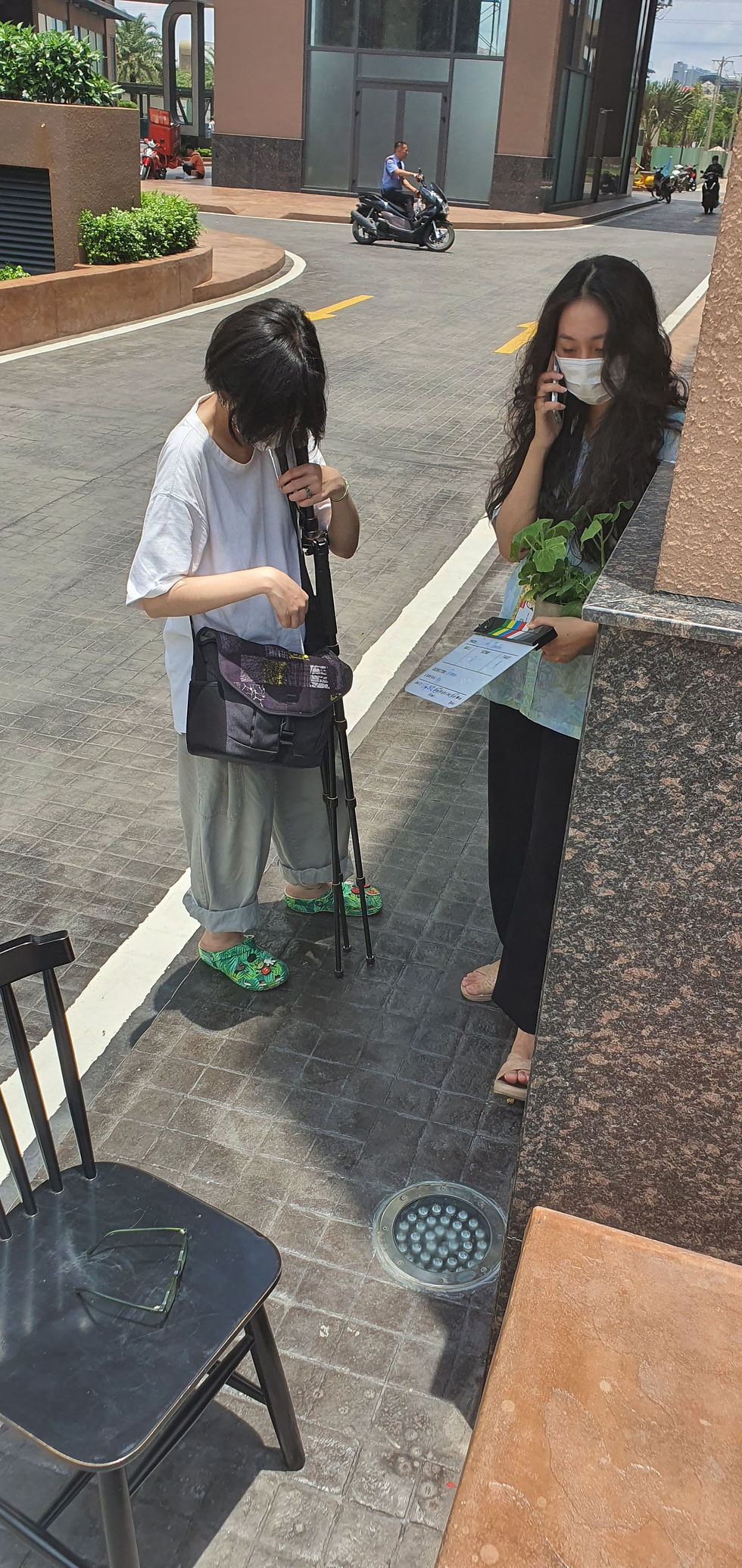
TVC Filming (Assistant)


Reference
Eigler J and Azarpour S (2020) Reputation management for creative workers in the media industry, Journal of Media Business Studies, 17(3-4): 261-275.
Solomon, R and Higgins M (1996) A short history of philosophy.
Marston, M (1943) Why 100,000,000 Americans read comics, The American Scholar, 13(1): pp.35-44.
Parente, D and Strausbaugh-Hutchinson, K (2014) Advertising campaign strategy: A guide to marketing communication plans, Cengage Learning